Interview for Infoglobi on Regional Developments

Here is the text of an interview I gave for InfoGlobi in English
How do you see overall situation in Western Balkan countries? Are you surprised that they are again causing headache to international community?

There are of course serious problems in the region, from polarized politics in Albania and Macedonia, no government in Bosnia, but these are political problems and it is hard to attract international attention at the moment. Especially with events in the Middle East, in particular in Egypt, the focus of the US and Europe is largely elsewhere and it is hard for the Balkans to be catching international attention. I also think that the problems of the region are serious, but one has to be careful not to exaggerate.

Kosovo and Macedonia are facing sort of institutional crisis. Albania and Serbia are involved in protests, is there a risk of spillover effect for other W.Balkan countries? Why?
I think there is no spill-over effect in the regions, the dynamics are different. What they share is three key causes: The economic crisis and thus lack of economic prospects, second the legitimacy crisis of governments in the region for not tackling corruption and third, the lack of sufficient and clear progress in terms of EU integration. This creates frustration in the region, but are not directly linked. In Serbia, the protests do not suggest that the government will fall, but rather that the Progressive Party might win the elections scheduled for next year. In Albania, it seems like the Berisha government is increasingly cornered like it was already 14 years ago and in Macedonia the opposition remains weak and the government firmly in control, although weakening lately.

Kosovo image has been damaged significantly. Having in mind that Kosovo remained a black hole in the Balkan, when it comes to visa liberalisation, or to the cut of preferential status of the goods from EU. Who is failing here and why? Isn’t this leading towards the isolation of Kosovo?
The problem is both with the government and the EU. The EU has been unable to formulate a clear perspective for EU integration, including visa liberalisation and a process towards accession. On the other hand, the government has lost a lot of credibility with being unable to really deal with allegations of corruption and moving Kosovo significantly forwards since independence.

KFOR will downsize its troops soon, while there are indications to end in a fast manner, the status of ‘supervised independence’. Is this a progress, or withdrawal of international community due to the decrease of the interest for Kosovo?


Generally, international organisations consider the political problems separate from security threats. While the political situation is unclear, both in terms of Serb-Kosovo relations and in regard to an effective government, but for this KFOR is not needed. I would thus not interpret this as an end to supervised independence, but a sign that despite the problems Kosovo is facing they are no longer security issues.

Prishtina and Belgrade are to start dialogue for technical issues. What do you expect from this dialogue and which are possible scenarios?


I am increasingly pessimistic. The longer it takes for the Kosovo government to form the harder it will be as little time is left. The Serbian government is unlikely to make any difficult compromises if it is concluded too close to the parliamentary elections, due by May 2012. Similarly, a Kosovo government is also likely to be weak and might hesitate to make compromises or be able to get sufficient support for such a compromise.

What Serbia has accomplished that Kosovo did not. The perception is that Serbia is closer to EU than Kosovo is?

Currently, Serbia is closer, and there is no doubt that in terms of laws and the institutions, Serbia will be ready much sooner to join the EU. However, the problem lies with Serbia’s relation to Kosovo. It is unlikely that Serbia will be able to join the EU without a clear relationship with Kosovo, which would include recognition of Kosovo.

What Balkan countries can do in order to speed up development process?


The problem is that parts of governing elites in most countries are not committed to EU integration, These elites often talk about being in favor of the EU, but block the process at the same time. There is a need for more serious reforms, not because the EU insists, but because it is benefiting the countries. What are intellectual elites doing? What do you think do they have a say at all in designing the future in the countries they live?

Intellectuals can be important in putting pressure on governments, to force them to take EU integration seriously and and also sending a clear message that reforms and EU integration is not just the only option, but also the most desirable option. Parts of the  intellectual elite in the region still talks about the nation and nationalism and are thus helping those governing parties which talk about national interests as an excuse to delay EU Integration.

Please, may you elaborate your vision regarding the future of Kosovo, Macedonia, Albania, Serbia, Bosnia and Montenegro? Is there a estimated timeline when transition in these countries will end? When they will become part of EU family?

This is a nearly impossible task. I would imagine that all the countries will be members of the EU in 15 years. It is unclear at this point whether the countries will join together which some in the EU will favor or whether the EU will encourage countries to compete for joining first. The order in which countries join is still unclear, but it seems that Montenegro might be ahead of others as it has no serious problems with its neighbors and is able to change the structure more rapidly than elsewhere. Macedonia could move quickly, but it will depend on whether or not a compromise with Greece will be possible, which will be hard and has been getting more difficult in recent years. What is clear that even if all the countries, including Kosovo, would resolve the outstanding the bilateral issues tomorrow, the challenges remain huge for the region and will take considerable time.

Europe’s Silence

Much attention has been devoted to the difficulty of the US administration to deal with rapidly changing events in Tunisia and Egypt. However, the European Union has been equally struggling in endorsing the popular demand for reform and democracy in Tunisia, Egypt and elsewhere in the region. While Europe might have less of a military investment in the region, the repercussions of instability in the Middle East might be more direct–beginning with potential refugee flows. At the same time, more than half of the EU experienced democratic revolutions in during the past generation: Not only the countries of Central Europe, but also Southern Europe (Portugal, Spain, Greece) saw the ouster of dictatorships governing in the name of stability in the past 35 years. The countries can be a model for the Middle East and while overthrowing tested and tried dictators always brings with it uncertainty, the European Union at its core should understand the demands of citizens in the Middle East for greater rights and democracy.

It is thus a great pity, that the EU has not seized the moment to support the pro-democracy movements in the region more vocally. Sharing the know how and the advantage of democracy and the rule of law are after all the greatest export the EU can offer.

5 October = 1 February? Or how the regime will end in Egypt

The mass protests called for today remind of the demonstrations organized by the Serbian opposition against the Milosevic regime on 5 October 2000. A make or break confrontation which will force the hand of those sitting on the fence. So what are the possible scenarios now?

1. The protests peter out: Revolution aborted

This is what the regime hopes. The demonstrations will exhaust themselves, increasingly disunited over what to do will just fade away. Afterward the regime cracks down on opposition. While this might be plausible which much smaller demonstrations, the number of people on the street just seems to large for this scenario.

2. The protesters will take over: A Revolution

The protesters will take over institutions and push Mubarak out. Mubarak has to flee if he does not want to risk his life. Such a fully fledged revolution seems equally unlikely as there are too many actors who have in the past supported the regime and will have an interest in preventing a total collapse of the old system. In particular the army has retained sufficient legitimacy to remain a relevant institution.

3. Protesters are attacked: Tiananmen scenario

Security forces suppress mass protests violently, considering the number of protesters the violence against the demonstrators has to be substantial to have any chance of success. Considering the army declaring its support for the grievances of the demonstrators, such a scenario would suggest that those using force would be themselves coming under attack, probably by the army. Thus, this would be more like the Romania 1989 scenario than China 1989. The use of force would also prevent those committing it to have some part in the new regime. In effect, at this point only those with nothing to lose would be candidates.

4. Protestors succeed: 5 October

The protesters show by their numbers that the old regime has lost all legitimacy, they take over crucial symbols of the old regime (TV?) and force the hand of those hedging their bets. As they change sides, the old regime crumbles.

What happens today does not depend on Mubarak, and maybe not so much on protesters either (as long as they show in large numbers), but on those members of the old regime who will have to decide which way to go today. If they decide that Mubarak has no future (which seems pretty obvious), there will be little space for Mubarak to continue.

The challenge might be of what happens on 2 February. In Serbia, 6 October has become the metaphor of the incomplete revolution–the unsavory deals made to secure the end of the Milosevic regime. While such a  Pacted Transition (as in Spain) has greater chances of leading to stable new government and prospects for democracy are better, there is a risk that many Egyptian might feel like the protests did not bring the change they hoped for. This, however, is a topic for another day.

The Otpor connection in Egypt


When I was following some tweets on Egypt, I was struck when I came across the symbol of Otpor. Subsequently I noticed that a number of protesters also using the Otpor symbol. The obvious question is whether this use of symbols was coincidental and some movements or protesters in Egypt were just inspired by Otpor or whether there are stronger links. A number of Serbian news sources of varying quality (Alo, Vesti Online) have now published articles suggesting that former Otpor activists have been training some opposition groups, including interviews with anonymous former Otpor members and the Serbian embassy. The main group in question seems to be April 6, launched first as a facebook group. The group has currently over 87,000 members and has been active for nearly three years already. According to recently released wikileaks documents, the group appears to have enjoyed some support from the US government, but the assessment of the US state department interloctutor in late 2008 is telling: The 6 April representative “offered no roadmap of concrete steps toward April 6’s highly unrealistic goal of replacing the current regime with a parliamentary democracy prior to the 2011 presidential elections. Most opposition parties and independent NGOs work toward achieving tangible, incremental reform within the current political context, even if they may be pessimistic about their chances of success. xxx wholesale rejection of such an approach places him outside this mainstream of opposition politicians and activists.” It seems like recent events have shown that the assessment of the group was more astute than the US state department.

Clearly, the main inspiration for the protests came from Tunisia, not Serbia, but the Otpor connection is telling for two reasons: First, it demonstrates that pro-democracy movements are linked across continents and lessons are learned. Second, the wikileaks cable shows that the US state department was in communication with opposition to the Mubarak regime already in 2008. It thus seems simplistic to accuse the government of just propping up Mubarak without listening to alternatives. The Otpor connection also suggests that there was at least some level of financial support for opposition groups from the US, even if it wasn’t the administration directly.


Tunisia and Egypt: Lessons from 1989 and the Colored Revolutions

Before the demonstrations in Egypt gathered momentum in Egypt, I wrote a short analysis of events in Tunisia, which is published in today’s Presse. In it I argue that the likelihood the fall of the Ben Ali regime will lead to democracy depends on a number factors, including the neighborhood, the larger geopolitical environment and a shared domestic goal. In particular, the regional context matters. Democratization processes are considerably more difficult if the country is surrounded by authoritarian regimes which all hope for the experiment in democracy to fail (see esp. in Kyrgyzstan). If the whole neighborhood goes, not all countries might succeed, but the old model of authoritarianism is clearly no longer acceptable. Thus, I would argue for Tunisia to have a good shot at democratizing, it’s example needs to be emulated in the region.

League of Extraordinary Gentleman


The question now is whether the protests in the region will lead to 1989–the collapse of regimes in a domino across the region–or the colored revolutions of the 2000s when a few countries began democratizing (or rather restarted) but often remained in an undemocratic environment (Ukraine, Georgia, Kyrgyzstan). There are strong reasons to believe that what we witness is more like 1989.

First, the trigger for the protests against the authoritarian regimes is not a rigged election, as was the case in Serbia, Ukraine, Georgia or Kyrgyzstan. Instead, it is general dissatisfaction with the system. Like Communist regimes, the autocrats in the Arab world have been increasingly unable to live up to the “bargain” they had offered. Stability and moderate increases in living standards for accepting authoritarian rule. The regimes have been increasingly unable to deliver.

Second, the age factor. The average age of the leaders of the Communist leaders in Eastern Europe in 1989 was 74. The average age of some of the Arab leaders  (Ben Ali, Mubark, Saleh, Gaddafi, Bouteflika) is close to 73. They represent a petrified a political system with little prospects for internal reform. While some countries have had younger leaders through dynastic succession (Assad, King Mohammed VI, King Abdallah), they represent the failure of the systems to fundamentally change from within.

Third, the demonstration effect suggests close links between the protests in the region. A protest in one country (Tunisia) helped break the fear in others. As it is not rigged elections which triggered the protests, the circumstances have also allowed the protests to spread rapidly. Once demonstrators lose the fear to go to the streets, the options of the regimes are severely limited.

None of these similarities mean that the regime will fall automatically. There is still the Tienanmen scenario for some regimes, while others might hope for protests to fizzle out. As they do not depend on a single backer (save for the US in a number of cases), like the Soviet Union, the links between the regimes are less immediate and the dominoes might not yet fall.

Milo resigns, once more

Yesterday, Milo Djukanovic resigned for the second time as Prime Minister. Ever since his return after a bit more than year out of office in 2008, he has made it clear that his return was temporary and he would not serve the full a term after winning elections in 2009. His resignation is thus no surprise. He announcement that he will remain president of the ruling DPS suggests that he wants to retain strong control over the party and government–let’s not forget that running the party is as (if not more) influential than running the country.

For years, Igor Luksic has been tipped as the presumed successor to Djukanovic. Sturanovic, PM last time Djukanovic resigned, was seen as a stop-gap solution until Luksic would be older and have consolidated his power base to take over. It now seems that Djukanovic believes Luksic can take over. Milo cannot come back once more without loosing a lot of credibility, thus this transition of power will have to succeed.

As in the past, the main challengers are not from opposition, but from within the DPS. Thus, the interesting question in the coming months will be, whether the DPS will remain unified in supporting Luksic and he will be able to persuade those in the party less supportive to accept him. Considering that the tensions with the DPS are not just over personality, but also over how to proceed with reforms, it seems unlikely that the party can survive without fracturing in the medium run. In this case, the situation is different than a few years back. One of the main opposition parties, the SNP led by Srdjan Milic has moved away from its previously strongly pro-Serbian line and opposition to independence. It’s more pragmatic approach might make it (or at least parts of it) a potential partner for part of the DPS, in case it splits, in the future. And by the way, guess from which the SNP split off in 1997: the DPS.


The End of the EU school year in the Western Balkans

Today the European Commission released its annual progress report. Throughout the Western Balkans analysts, journalists and government are paging through the reports and interpreting their meaning. Independently of the content of these reports, it confirms the weight of these reports. The reports have increased over the years.  Just the analytical report for Montenegro is now some 132 pages long, in 2007 it was less than half the length (48 pages). Of course volume is not everything, but as the reports increase in size they are getting more detailed and are thus able to provide more specific recommendations.

More importantly, the progress reports highlight the potential when the European Commission is communicating directly to the public. Even if the reports are technical and require a careful reading, their wide audience and the weight they carry suggest that more such communications would do the integration process in the region well. At the moment, the EU is perceived to be largely silent for 364 days and just issue its opinion on one day (except large events, such as visa liberalization, or granting candidate status).  While it is commendable that the reports are increasing in length and quality, their success suggests that the EU, the Commission in particular, needs to think about ways of communicating not just with the governments of the region, but also the citizens in more regular intervals and thus help to re-energize the accession process which appears to have run out of steam lately.


A Note to Hill and Knowlton and the Government of RS

A few days ago I received an email from a representative of “Hill and Knowlton” one of the largest international lobbying and PR companies to discuss how  “key people in the UK perceive Bosnia and Republika Srpska”. By the formulation it quickly dawned on me who was curious to find out my opinion, namely the government of the RS. Thanks, Hills and Knowlton for the offer of such an anonymous conversation (original email is below, I just removed the name and contacts of the person who wrote to me). Instead, I’d rather like to reply publicly about my views of the government of the Serb Republic:

First, it seems frivolous to spend RS taxpayer money on a big international lobbying firm.  Among the clients of the Brussels branch of H&K is not a single government of a state or a region. Instead, the company represents big business such as Unilever, Yahoo and HP. Interestingly, H&K also represents Delta Holding. In the UK, the register of the Association of Professional Political Consultants lists Hill and Knowlton and only mentions that RS was a paying client to the company in the period from 1 September to 1 November 2009. Between 1 March 2009 and the most recent reports up to the end of August of this year, Singapore and the RS are the only two governments represented by the company.

Second, if the government wants to improve the image of the RS it should fully and unequivocally stand by the report on Srebrenica issued in 2004 by the RS government of the time.  If the newly elected president of the RS continuous to downplay the number of victims, he undermines the credibility of the RS more than anybody challenging the RS from within Bosnia or outside.

Third, suggesting that the RS is a permanent category, while Bosnia and Herzegovina might not be, is undermining the legitimacy of the government of the RS. The Dayton Peace Agreement which the only basis on which the RS exist as part of Bosnia and Herzegovina clearly links the two. While Bosnia and Herzegovina can only exist with the RS, the RS can only exist within Bosnia and Herzegovina. There is no right for the RS to leave Bosnia, there is no international support for such an adventure and the RS is not Montenegro (i.e. to copy the mechanism chosen by Montenegro to leave the joint state with Serbia).

Fourth, if critical NGOs and media are repeatedly attacked and marginalized by the government, it cannot earn my respect.

Fifth, I keep hearing officials from the RS stating at public occasions that the existence of the RS is under threat and they have to defend the RS. This is of course absurd: No significant international actors is suggesting to abolish the RS. However, the government of the RS itself has over the last years significantly undermined the legitimacy of the RS.  By suggesting a referendum on independence, by undermining the state, it has gambled away a lot of international credibility.

If the government is concerned with its image, I recommend against hiring Hill and Knowlton or any PR firm and rather reconsidering its policy. No PR campaign can achieve what a different policy could.


From: K.M. …@hillandknowlton.com]

Subject: Consultation Request for Perceptions of Bosnia and Republika Srpska

Dear Dr Bieber,

I am writing to see if you would be willing to participate in a consultation we are undertaking on Bosnia and Herzegovina, and in particular, on the government of Republika Srpska.

The aim of this exercise is to ascertain how key people in the UK perceive Bosnia and Republika Srpska, as well as their opinion on the key issues facing the country including: the progress towards EU membership, the impact of recent parliamentary elections, the future of the OHR, etc.

The research will be conducted by Hill & Knowlton on behalf of the Government of Republika Srpska and, for your information, we are also carrying out a similar exercise in Brussels and several other EU member states. In the UK we will be speaking to stakeholders from government, the Foreign & Commonwealth Office, Parliament, think tanks and the media.

The format would be an informal interview lasting around 20 minutes and all discussions will be completely confidential and anonymous.

We do not have a ‘standard’ quantative questionnaire, but prefer to conduct an informal discussion with some questions to steer the conversation. The final consultation report will not only be totally confidential, but any quotes included will not be linked to any particular person and instead be referenced to the broader institution (eg. ‘media’, ‘UK decision-maker’ etc).

The reason why we are doing this consultation is to help the Government of Republika Srpska canvass opinions and views on the situation in Bosnia and Herzegovina, and also the upcoming challenges the country will be facing.

I realise that your diary is extremely busy, but hope that you will be able to spare 20 minutes for this exercise. Please do not hesitate to contact me if you have any questions.

Best regards,

K.


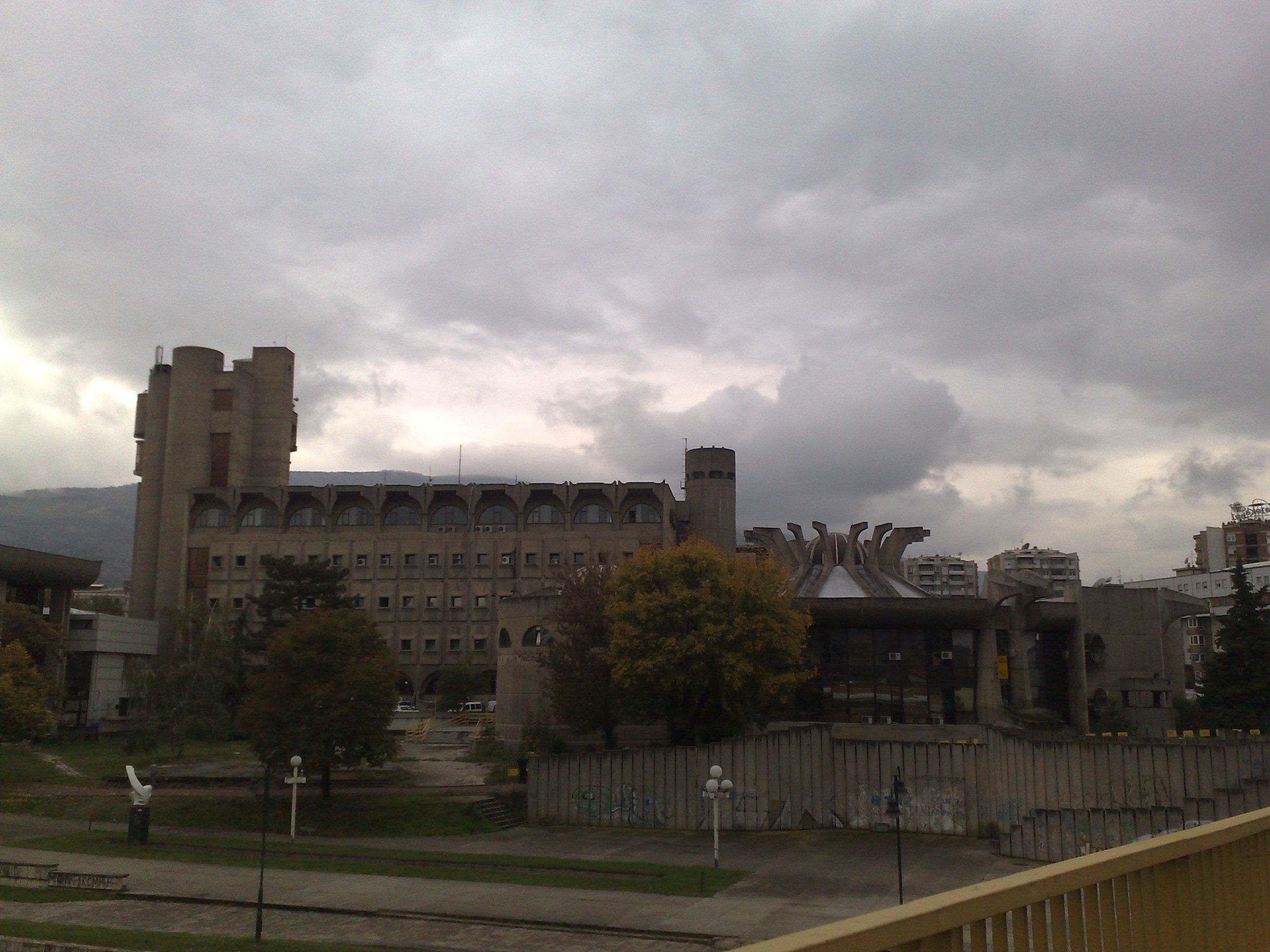
Aleksandarplatz, Skopje

Berlin has an Alexanderplatz, but it’s nothing in comparison to Skopje’s own Aleksandarplac, aka Macedonia square. In the latest development of the Skopje 2014 plan, the pedestal for Alexander the Great is already being built and the pedestal is some two stories tall so it’s easy to see how Alex will tower over Skopje. The Pizzaria Fiorentina on the square already has an Alexandar Pizza on the menu (it’s the pizza with everything, suv. vrat and all other goodies for emperors and heroes).

Lion Type One (old school)

Lion Type Two (Transformer)

Close by on the bridge between the government and the center, four new pussy cats guard over the Vardar, know as Lav tip 1 and Lav tip 2.  The old-school lion is overlooking the newer part of town while the transformer lion (right) is facing stara carsija.

Of course part of the building plan is also the ‘reconstruction’ of buildings long lost. It is thus without any irony that one of the new buildings is called ‘stari teatar.’

New old theater Old new post

Momentum for the Balkans?

Just having returned from the Rose-Roth Seminar of the NATO Parliamentary Assembly I am left with a mixed, but overall rather gloomy impression of the Western Balkans. As often these seminars are a competition between the glass is half full and the glass is half empty analysts. While its hard to give a verdict who won, what clearly emerged from the discussion is that the US is not really engaged in the region anymore, irrespective of Hillary Clinton’s visit last week. Similarly, nobody was there to suggest that the EU wasn’t paralysed and without a strategy at the Western Balkans at the moment. In particular striking was the sense enlargement was no longer being pursued with any vigour by the EU (or rather its member states). One participant suggested that some member states are willing to risk delaying membership of the region in favor of not taking the risk of communicating the enlargement to their electorate. Thus, maybe the worst effect of the economic crisis is less the economic impact on the region, but rather the weakening stomach in the Western half of Europe to live up to its promise to the region.

What left a more optimistic impression is the clearly new atmosphere in regional relations, especially between Serbia and Croatia. Similarly, the tone of reps. from Kosovo and Serbia on relations was very promising, emphasizing the need for technical talks and improving lives of inhabitants of Kosovo.

The fact that the meeting could include MPs from the Kosovo assembly (including a Serb MP), and a Serb “Progressive” and former VJ general and a current German  general with KFOR without much controversy is telling. Maybe the passivity of the EU and the US throws the spotlight in the region. It might be that momentum for reform, the title of the seminar, might be more likely to originate from with the Western Balkans than from outside.