Balkan Lego Challenge

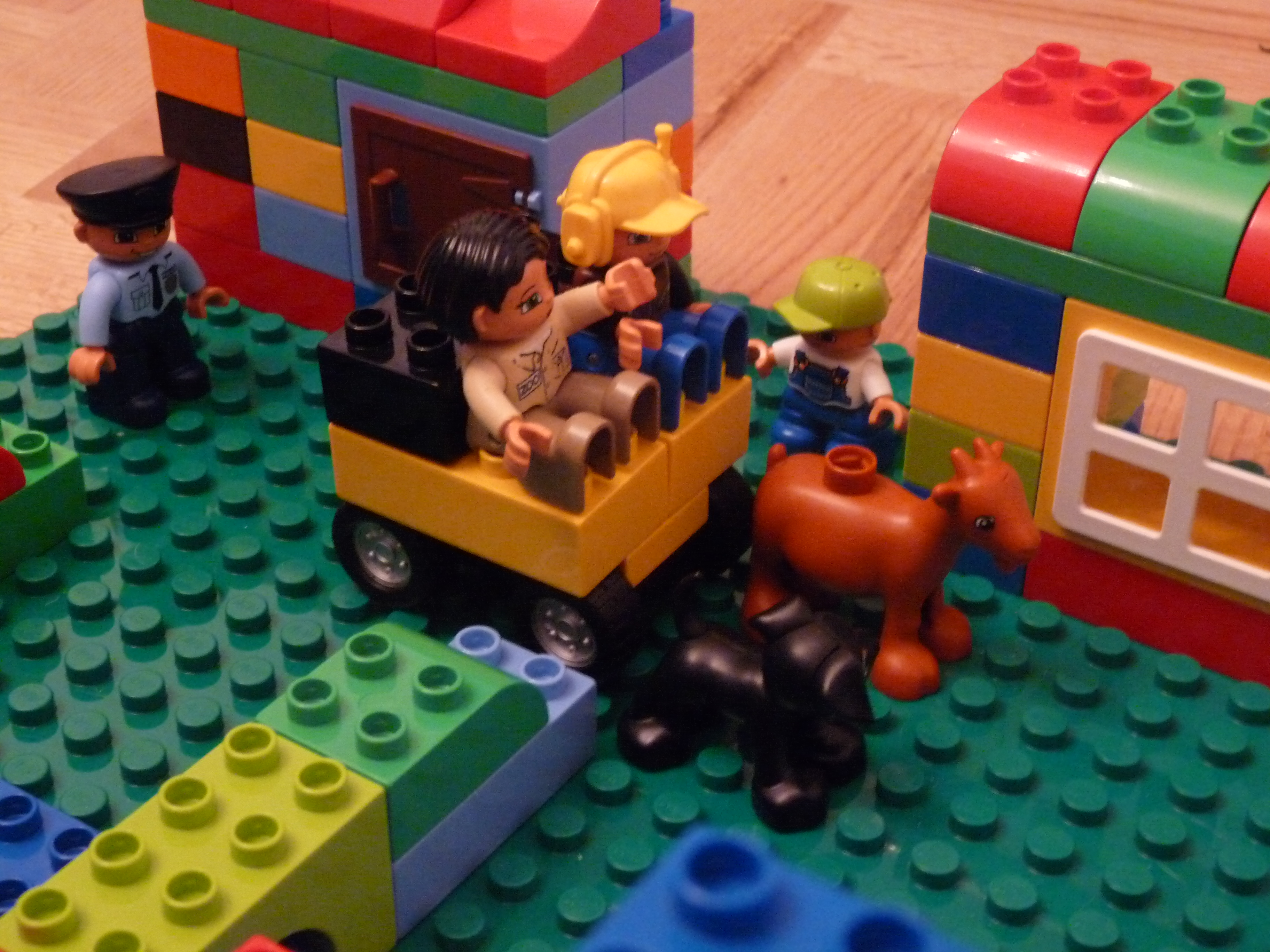
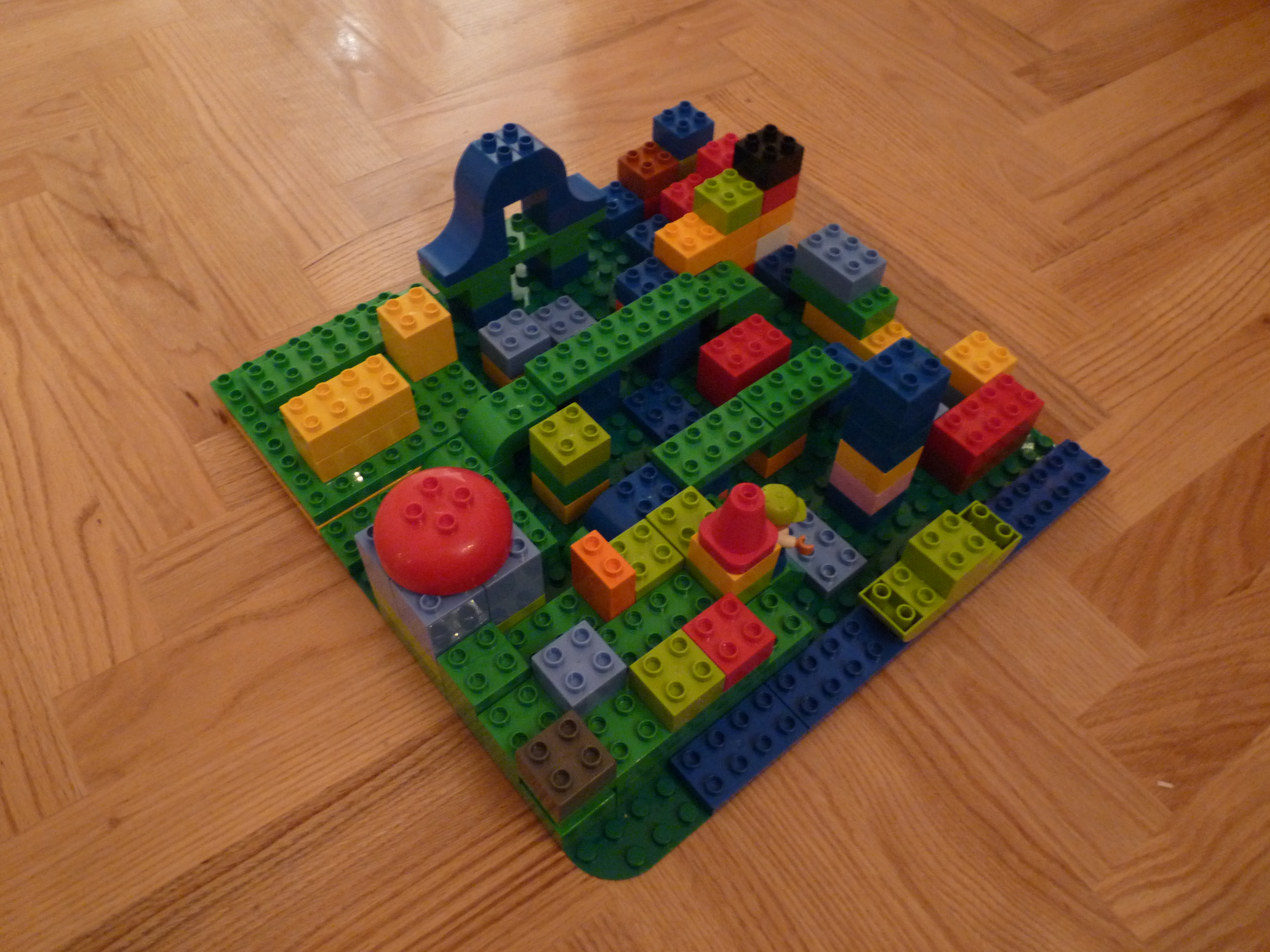
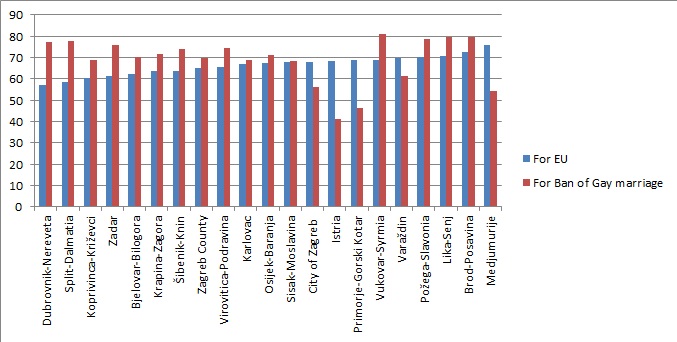
Here is an end of year Balkan Lego Challenge. While Lego might have its own architecture series, it is much more interesting to do the same with some standard bricks. Here are four challenges from the Balkans: two cities, one historical event and one architectural style. The results of much construction during the holidays.

Enjoy guessing (in the level of difficulty)!

1st Challenge: Guess the city!

P1140147 P1140148


2nd challenge: Guess the historical event!

P1140155 P1140157


3rd challenge: Guess the architectural style!

P1140173 P1140174


4th challenge: Guess the city!

P1140166 P1140167

When Austria first discovered the Adriatic: Notes from an exhibition

I am re-blogging a post I wrote a few weeks back for Total Hvar on an exhibition in Vienna that is worth a visit:

Image

The museum of the city of Vienna ) currently organizes an exhibition on the “Austrian Riviera. Vienna discovers the sea”  on how the Viennese and with them the upper and middle classes discovered the Adriatic in the 19th century.

While the exhibit mainly focuses on the prime destinations of the late Habsburg elite—Abbazia (today’s Opatija), the Brioni islands and the northern Adriatic, Hvar is also mentioned, especially Hygienische Gesellschaft Hvar and Hotel Elisabeth (today’s Hotel Palace).

After the Südbahn, the southern train line from Vienna to Trieste opened in 1857, a journey that took days was cut down to around 12 hours (not much slower than the same journey today). The Adriatic became for the first time accessible for a wider number of visitors from Vienna and elsewhere in the Habsburg Monarchy. The train line coincided with the beginnings of modern tourism and—as the exhibition explores—the first visitors mostly came in winter, traveling alone for health purposes, only a few decades later summer tourism emerged and upper-middle class families traveled for the summer to the Adriatic. After arriving in Trieste or later Rijeka, the tourists traveled onwards to Hvar and Stari Grad and elsewhere by steam boat. To make the new destinations attractive, they took their names from the Western Mediterranean that had already developed tourism: the Adriatic coast came to be known as the Austrian Riviera and Hvar as the Austrian Madeira.

The exhibition includes old time tables, paintings, objects, and photos. Old bathing suits and cartoons remind the viewer that women and men bathing together was controversial at the time. This is a fascinating exhibition that provides for a great journey into the past when the Adriatic was “discovered” and tourism had its beginnings. It is a pity that the exhibition did not reflect more on how this “discovery” fit into the larger identity of the Habsburg Empire. Graham Robb wrote a few years ago in his Discovery of France how infrastructure and tourism were part of the nation and state building process—train lines “shrank” the country and allowed citizens to discover “their” country. The title of the exhibition in Vienna—the “Austrian Riviera” suggests a similar process in the Habsburg Monarchy, but the main challenge here is the diversity of the country. The exhibition shows how the different traditions of Dalmatia were a source of exoticism and thus the appeal of the journey, but the growing political demands of Croats, Italians and Serbs of Dalmatia, however, were rather a threat for the Monarchy.

Image

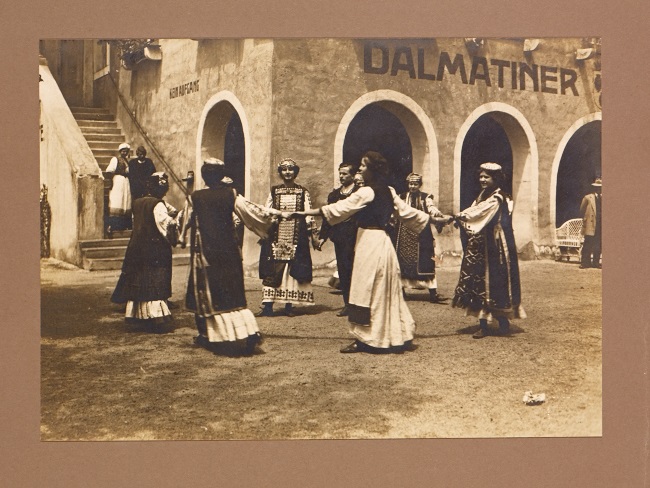
Photo from the Adriatic Exhibition 1913

The timing for the exhibit is perfect: exactly 100 years ago, on the eve of World War One, Vienna celebrated the Adriatic with the Adriatic Exhibition, a kind of early theme park complete with a mini replica of Venice and the rector’s palace of Dubrovnik. Over 2 million visitors visited Dalmatian villages, steam boats, slide shows of the journey. Thus those who could not afford the trip to the South could (pretend to) escape the capital of Monarchy for the day.

Image

Cafe Dalmatia at the Adriatic Exhibition in 1913

There is also an impressive and very detailed catalog available accompanying the exhibition. The exhibition will run until late March 2014 at the Wien Museum (1040 Vienna, Karlsplatz 8). Further details here.

The good past and the bad past: Two Belgrade exhibits

A family tree

A family tree

Picturing the past

Picturing the past

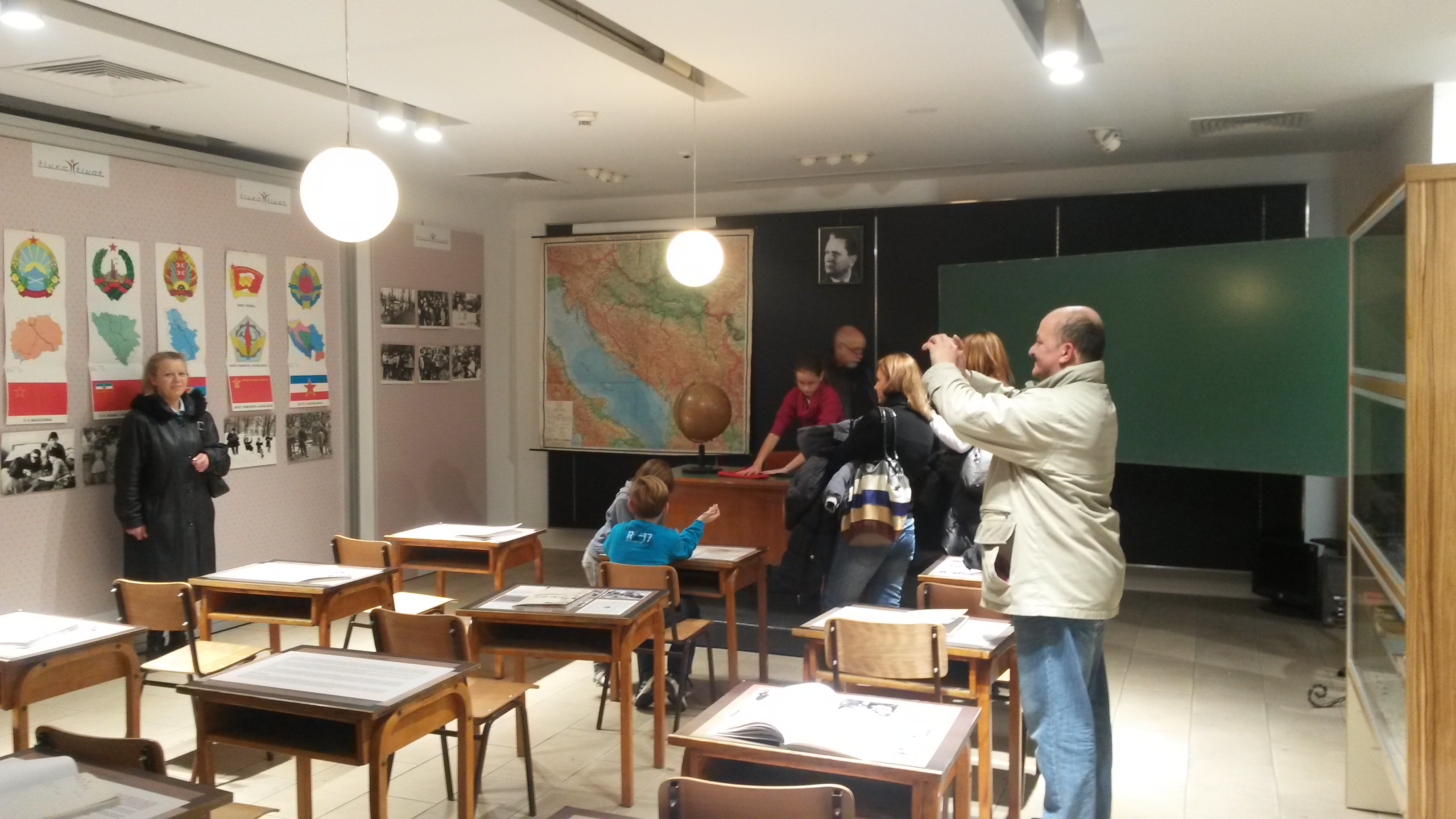
Belgrade is hosting two very different exhibits these days, just a few meters apart: The exhibition Bogujevci—A Virtual History was opened with much public attention, it was less the few protesters who opposed the exhibit, but rather the visit of Ivica Dačić. Even now, a few policemen in front of the exhibit and out on the street keep a watchful eye. Otherwise, there is a steady trickle of visitors… just down the road another exhibit just opened, called Živeo život, a second exhibition about “what we lost and brought with us from Jugo”. Here, unsurprisingly, a much larger number of visitors listens to Yu-Music, marvels at sports stars of Yugoslavia or looks through the Yugoslav supermarket.

A painful reminder of the past

A nostalgic couch

A nostalgic couch

Both exhibits give a central place to a living room, complete with couches, TV, dark brown wall unit and kitschy decoration. In both, they are reminders of the past. The first represents the home of the Bogujevci family in Podujevo before most family members were killed in 1999, the second is generic living room of Yugoslavia. Both exhibits try to take historic events out of the larger political narrative of grand events and big politics to a personal level–literally into the living rooms. The exhibit about the Bogujevci family is neither pathetic, nor does it provides for a grand narrative of the wars. It simply shows the consequence of a war crime on a family and the very personal efforts of the family to see some of the perpetrators punished. The exhibit is testament to their effort to remind the public of the crimes. The “Live your life” exhibit instead offers an escape from the present. It puts the red Yugoslav passport into a golden frame, and presents the glories of Yugoslav life and consumerism with little irony or critical narrative.

For visitors, this is the opportunity to put on the pioneers’ cap and scarf, step on a vespa and listen to Yu-music. There is no mention of the inflation, the shortages, poverty, or the absurdities of the political system. Where the House of Terror in Budapest and similar exhibits  try to paint a picture of Communism as a period of pure horror, this exhibit does the opposite by mixing personal nostalgia with the memories of a country gone by. These two exhibits shed two very different perspectives on the past and how large events effected everyday life.

Red passport--golden frame

Protests from Maribor to Istanbul: Looking back at a year of demonstrations

graz 2014 protest FINAL

Here are some answers for an interview on the protests I gave to the Macedonian daily Dnevnik on the occassion of the conference “Rebellion and Protest from Maribor to Taksim. Social Movements in the Balkans” that will be organised this Thursday through Saturday by the Centre for Southeast European Studies in Graz.

What signal are the Balkans sending through these social movements: are they waking up, finally?

The protests accross the region, from Maribor to Istanbul show, that civil society is alive and well in many countries. Citizens care about public spaces, are concerned about corruption and austerity and resent the close links between business and politics. Of course, there is great variation in the size of the protests, their duration and their success. I would see the protests in Sofia as the most impressive display of public discontent this year. Their duration is spectacular and their participants are sceptical of the entire political elite, both government and opposition. When the target of the protests is so broad, unlike for example the building a shopping centre in a park as in Istanbul, it is often hard to sustain momentum. There are two clear messages that the protests send. First, citizens do not trust elites, they are seen as not representing the citizens, but private interests. Thus, the message is a call for more democracy and rule of law. Second, in some protests, the economic crisis and the difficult situation many citizens have found themselves in was either a central theme, or a trigger, like high electricity prices in Bulgaria. Overall, citizens in the region have endured much greater economic hardship than elsewhere in Europe without protesting. Economic hardship becomes a key trigger is when the difficult situation is combined with a sense of lack of fairness.

What do all this protests, as you described: from Maribor to Taksim, have in common?

Every protest is individual and has different causes and triggers. Yet, there is a larger pattern, that extends of course beyond Maribor and Istanbul: we have probably seen the largest wave of protests over the last two-three years around the world since 1989. These protests have taken place in democracies like Spain or Greece and in dictatorships like Libya and Syria. Most protests have taken place in the European borderlands of the Mediterranean and Eastern Europe (see the current protests in Ukraine). The protests share a sense of frustration with being badly governed and having unresponsive elites. The promise of prosperity and better rule of Europe is close and thus seems possible. This has motivated many protests: the comparison of one’s own government with the possibilities close by. The economic crisis might not always be central to the protests, but the crisis has shed light on corruption and patronage—if there is less money to go around in times of crisis, bad governance becomes more obvious.

 Do you, as an expert, think that this is the right way for the Balkans to make their “dreams come true”?

Protests can achieve their own goal and still fail. Individual demands can be met, governments can resign—as was the case in Bulgaria in February—and yet fundamental change might not happen. Thus not addressing the roots of the problem that brought about the situation in the first place. The key is for protests to lead to institutional forms of civic engagement. I don’t just mean NGOs, but rather movements , political parties and also media that will carry the demands along. This is always a tricky moment, as those working through institutions might be accused of  “selling out” and some indeed might become regular politicians and abandon their original goals. On the other hand, the demands or the underlying grievances of the protests are often  too  large to be addressed right away. When change takes time, it cannot be achieved through protests alone and then invariable the question arises of how to pursue change and reform. A protest can have two functions: it can empower citizens, giving them the feeling that they can achieve change , in the words of banner from protests in Banja Luka to save Picin park, “You are not a slave of the system, you are change”

 What if their problems are not solved as they want and insist?

Disappointment is nearly inevitable: Firstly, protests movements include citizens with many different expectations. In fact, to be succesful a protest movement usually has to draw from different social groups with varying hopes and grievances. Observers noted that the protests in Istanbul brought together gays and lesbians, Kurdish activists, environmentalists and citizens who had not been previously active. They will all have different expectations of the protests and some will find their demands not met. The success or failure of protests is thus not only a function of whether the immediate demands are met, but rather whether the political environment changes—if those who went to the streets realise that they can achieve change and that institutions are responsive. This dynamic sometimes takes time to be visible. The protests in Belgrade in the winter of 1996-7 first seemed like a failure—Milosevic met the formal demands, but continued to rule like before. However, the revolution of 2000 was unimaginable without these earlier protests. Similarly, the protests in Taksim have been repressed with force by the Turkish government and at the moment it does not seem like they were successful. However, as a banner in Istanbul read, “This is just the beginning!”, “From now on, nothing will be the same again!” We do not know what the next form of protest will look like in Turkey, but it clear that many citizens are dissatisfied with the status quo and demand not just a different government, but a different style of governing—and this is a common feature across the region.

Croatia Referendum Shows Perils of Direct Democracy

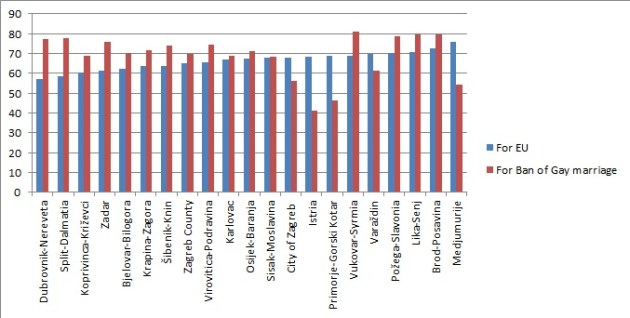
Here is a comment I wrote for Balkan Insight on the recent referendum in Croatia. I have added two tables that compare support for EU membership and support for the constitutional definition of marriage as a union of a man and a woman.

slika.png

Last Sunday Croatia held its third referendum in the last 23 years. In 1991 Croatian citizens voted whether to remain in Yugoslavia, in 2012 whether to join the EU and now on whether a marriage should be constitutionally defined as a union of a man and a woman. Hardly of the same caliber as the previous referenda, it passed with nearly a two third majority. The referendum was in fact a demonstration of the risks of direct democracy. Croatia already defines marriage as such, all be it not in the constitution. Furthermore, there is no effort to move towards giving same-sex partnerships equal status to marriages. As a result the initiators of the referendum—a previously unknown ultra-conservative group “In the name of the family” (with support of the Catholic Church)—achieved a success without any great legal consequence, but political significance.

Some commentators in Croatia and outside decried the result as evidence of a conservative, backward looking Croatia. This is, however, is one-sided reading of the referendum.  Firstly, only ten European countries open marriage to same-sex couples, all of them in Western and Northern Europe. Thus, Croatia is by no means exceptional. Five other EU member states ban same-sex marriage, namely Hungary, Bulgaria, Poland, Latvia, and Lithuania. According to the Rainbow Europe index of ILGA the main European group lobbying for equal rights of LGBT communities—measuring legal protection, human rights violations and social attitudes—Croatia ranked 13th among 49 countries in Europe, at similar levels to Austria, Finland, and well above Greece, Italy and all other countries of Central Europe except Hungary. Second, attitudes in Croatia are no particularly hostile towards gays and lesbians and opposition to opening marriage to homosexual is not particularly pronounced. There are few recent Europe-wide polls on levels of support for opening marriage to homosexual couples, but Eurobarometer numbers from 2006 indicate that the levels of the referendum outcome are do not make Croatia a conservative outlier. A 2012 study of the EU’s Fundamental Rights Agency of discrimination against LGBT citizens in the EU (and future members) did find that Croatia ranks as the country with high level of LGBTs who experienced discrimination and harassment (60% experienced harassment or discrimination within the previous year), only Latvia has a higher level. The levels are similar in Italy, Cyprus and Poland. Thus, Croatia belongs to the countries of the EU that are more conservative in regard to LGBT citizens, but largely reflected Central and Southern European patterns.  Third, the turnout of the referendum was low, only 37.9% voted, thus with support for the initiative at 65.87% only a quarter of all Croatian voters endorsed the initiative.

Yet, the group and its referendum were successful. (below is added to the Balkan Insight Comment). Here it is worthwhile looking the 2012 referendum joining the EU. (added to the Balkan Insight Comment). As the table below shows, the support for limiting marriage is not inversely related to support for EU across counties in Croatia. In most counties citizens supported both. The only places where we can identify a clear discrepancy are Istria and the region around Rijeka where a majority voted again the prohibition of same-sex marriage, but for the EU.
Croatian ref percent

If we look at absolute numbers, see table below, a similar pattern emerges that support for accession to the EU was not lower where support for the recent referendum was high. The only region that is striking here is Split, where in fact more people voted in favor of the ban than voted in favor of joining the EU.

Croatian ref numbers

Thus, while there is a clear regional pattern of support and rejection of the ban on same-sex marriage (with more liberal regions in Istria,around Rijeka, and to a lesser degree in Zagreb and Medjumurje and more conservative regions in Dalmatia), it would be wrong to assume a straightforward liberal-conservative divide that translates to Euroskepticism. A second point of comparison is turnout (continued from the Balkan Insight comment). Turn out at the referendum is not as low as it would seem. Turnout in 2012 on joining the EU was less than 7 percent higher, 946.433 voted in favor of the ban, some 1.299.008 voted for joining the EU. Referenda often have low turn outs as they are usually able only to mobilize voters who are concerned with the issue at stake. It would be thus a mistake to consider the turn out a failure for the church and the groups that supported the initiative. The main successes reach beyond the referendum itself. For the first time, conservative groups in Croatia were able to gain main-stream support for a social issue, rather than a national issue. While popular support for “homeland war” can be more easily generated, Croatian society, as other post-Yugoslav societies, have been overall unresponsive to social conservative initiatives and policy agendas beyond national issues (borders, veterans, interpreting the past). The referendum suggests that a conservative social agenda might gather popular support. Such campaigning is likely to be polarizing and cannot capture a majority, but can energize the conservative spectrum of the electorate. Not unlike the Tea Party in the US, such an agenda is unlikely to be sustainable in the mid-term or to gain a majority, but it can dictate the debate. Finally, this referendum opens the door to potentially other referenda. It remains to be seen how serious the threats of nationalist groups in Vukovar are to seek a referendum on banning Cyrillic, but the success provides an incentive for the opposition to by-pass representative democracy and impose a conservative agenda through referenda (or their threat). Slovenia has had some similar experiences with multiple referenda in 2010-2012, mostly initiated by opposition groups that among others blocked pension reform and a law that would have put same-sex partnerships on equal footing with marriage. The threshold for holding a referendum in Croatia is higher (10% of all registered voters), but the success of the referendum against same-sex marriage highlights the ability to reach the number of required signatures if the issue has a polarizing effect and well-organised groups stand behind the initiative.

Thus, the referendum is less the evidence of a backward and conservative Croatia, but of the risks and potential of using polarizing social issues to dictate the policy agenda.

The show will go on: EU enlargement and the new German government

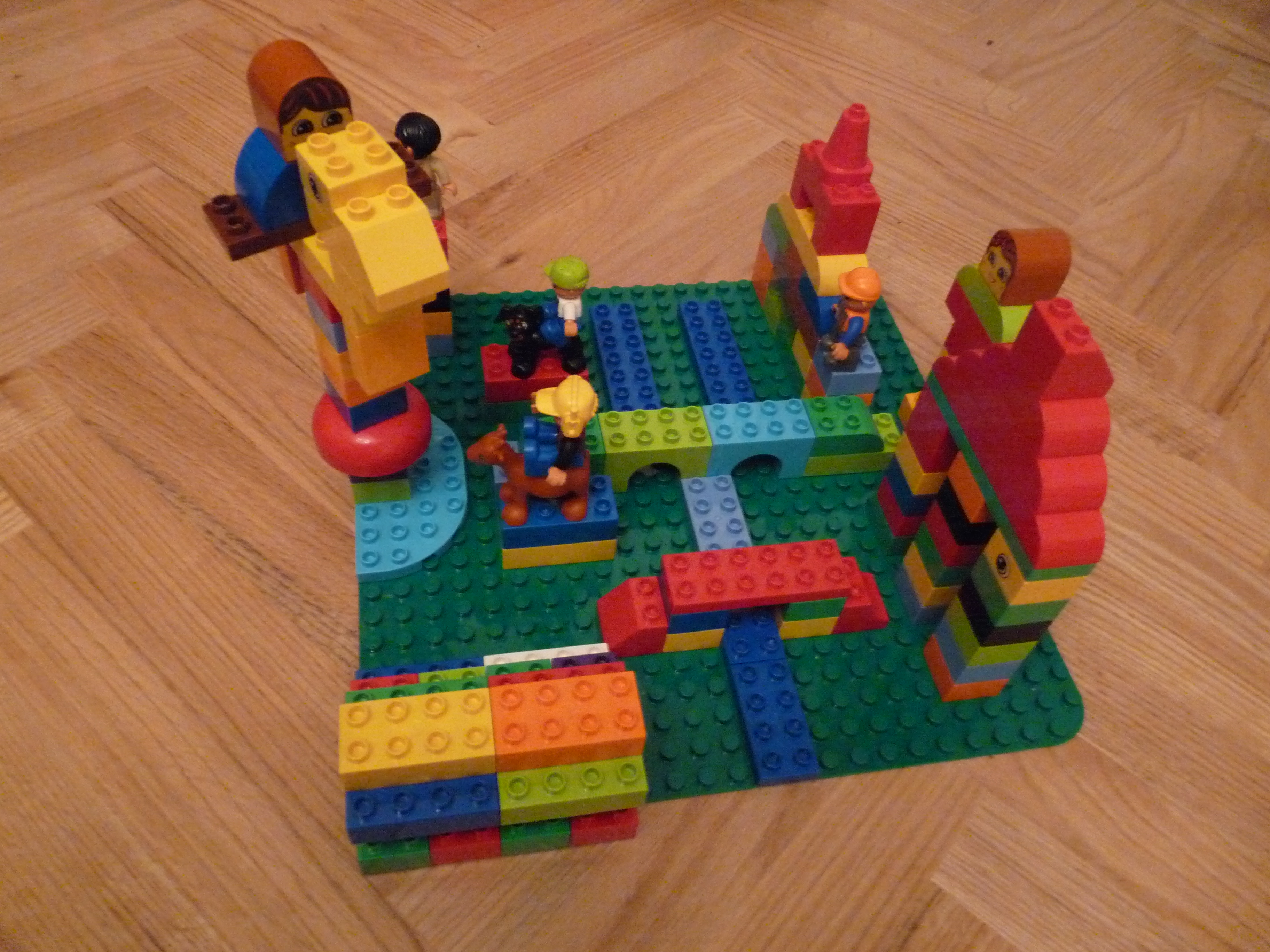
Signing of the coalition agreement, 27.11.2013 (author:CDUCSU)

Last week the German SPD and CDU/CSU signed the agreement for forming a grand coalition. This 185 page long document sets out the agenda for the new government has been negotiated now for some 2 months. It also discusses EU enlargement, making it a key document in assessing the perspectives for the EU integration of the Western Balkans in the coming years. German is not just an important member state, but with 75 percent of Germans against enlargement in the coming years, the country with the highest number of enlargement skeptics. The section on enlargement (p. 165) towards the Western Balkans is just one paragraph long (part of one page on EU enlargement and Eastern partnership), here in the German original (it thus did not receive much attention in the German press covering the coalition agreement, see SZ, FAZ  and FR):

“Die Erweiterung der EU ist aktive europäische Friedenspolitik. Die bisherigen EU-Erweiterungen sind im Interesse Deutschlands und Europas. Wir stehen dazu, dass dieser Prozess unter strikter Beachtung der Beitrittskriterien fortgesetzt wird und die Staaten des Westlichen Balkans eine Beitrittsperspektive haben. Sowohl Serbien als auch Kosovo müssen ihre eingegangenen Verpflichtungen erfüllen. Wir wollen KFOR im Einklang mit der Sicherheitsentwicklung schrittweise reduzieren und zum Ab-schluss führen. Gemeinsam mit unseren Partnern und Verbündeten werden wir die Heranführung der Länder des Westlichen Balkans an EU und NATO aktiv vorantreiben. Für die EU-Erweiterung sind die Anwendung strenger Kriterien und klar überprüfbarer Fortschritte wichtig. Maßgeblich sind sowohl die Beitrittsfähigkeit der Kandidaten als auch die Aufnahmefähigkeit der Europäischen Union.”

In essence, it maintains the German committment to EU enlargement and describes it as a peace project and German and European interest. However, it also points out that the process shall continue “under strict observation of the accession criteria” and later once more “strict criteria and clearly identifiable progress. Essential is both the ability of the candidates to join, as well as the ability of the EU to absorb the countries”. As a result, the coalition agreement suggest that the new German government will pursue the enlargement as in recent years. The multiple references to strict criteria, visible progress and the absorption capacity of the EU all suggest that enlargement will remain difficult and Germany, reflecting the larger tendency of the EU for member states to get invovled in the enlargement process, will assess the readiness of countries seperate from the Commission.

Some change is though likely: the composition of the new government has not been announced yet, as the SPD members have to first vote on the coalition agreement, but traditionally the junior partner in coalitions holds the Foreign Ministry. It is likely that an SPD-led Foreign Ministry will be more supportive of EU enlargement than the previous FDP-led ministry. The coalition agreement, however does note, that all EU policy decisisons will be particularly coordinated by the government under leadership of the chancellor and vice-chancellor, so there will be little room for a different policy of the SPD. In addition, the short mention of enlargement does also serve as a reminder that it is a low priority for the new German government.